

The containerized freight this gear moves
A chassis is the wheeled frame that carries an ocean container over the road. Long Road places the container on the chassis at the terminal and hauls it to your yard, warehouse, or receiver, then handles the return. Owning the fleet keeps the right unit on hand and available, so a container comes off the terminal on Long Road gear the day it lands. This is the equipment behind Long Road container drayage, matched to the size and weight of each container. See the full lineup on our equipment hub.
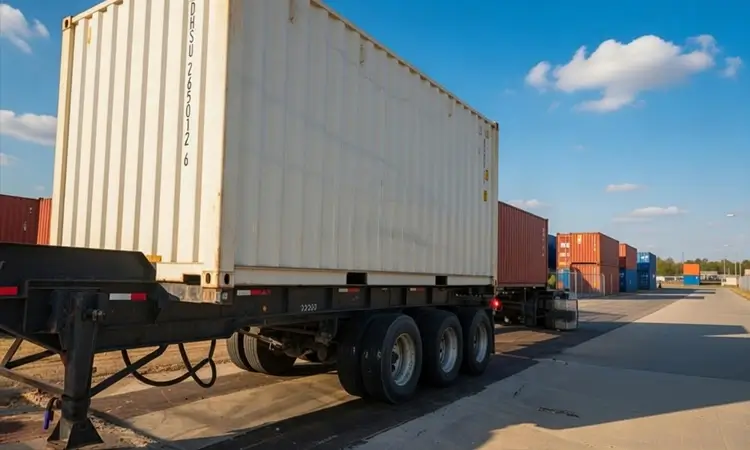
Standard and slider chassis for legal-weight containers
For any container that rides at legal weight, Long Road runs dual-axle standard chassis and adjustable slider chassis.
- Standard 40' and 20' two-axle chassis, the default for legal-weight containers.
- Slider (adjustable) chassis that fits 20', 40', and 45' containers on one frame.
- The slider also carries two empty 20' containers in a single move.
Legal weight runs to 80,000 lbs gross for a 40' container and 70,000 lbs for a 20'. Containers within those limits move on a standard or slider chassis with no permit.
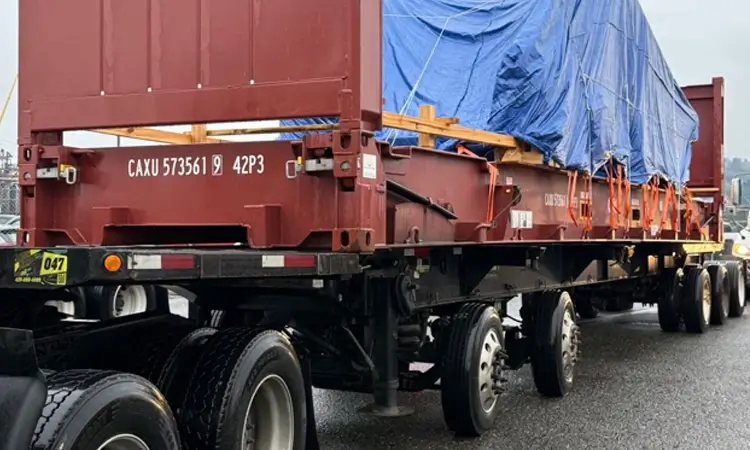
Superchassis for overweight containers
When a container weighs more than a standard two-axle chassis can carry legally, Long Road moves it on a superchassis. These come in 3-axle, 4-axle, and 5-axle builds. The extra axles spread the load across more points, which keeps the axle weights within the limits and keeps the move legal. An overweight container travels on a permit, and Long Road backs the weight with a CAT scale ticket so the number is documented. This is the equipment behind overweight drayage for dense freight like stone, metal, and machinery.
Call (425) 800-4609 for private dual-axle, slider, and 3-to-5-axle superchassis that move legal and overweight containers off the terminals.
Get a Quote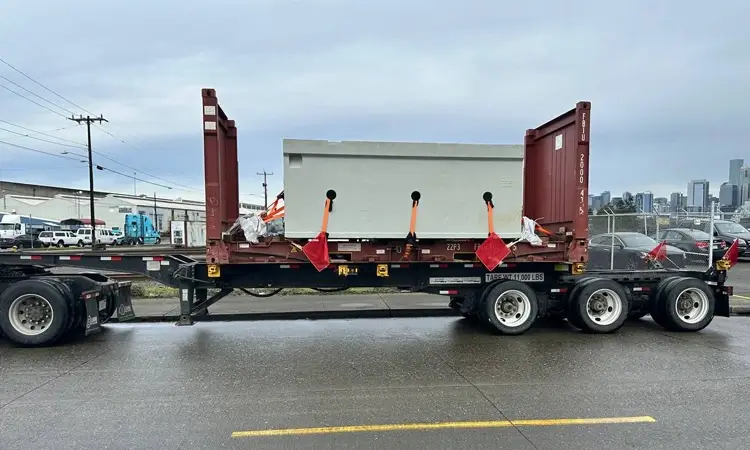
Chassis types and weight limits, side by side
Which chassis your container needs is decided by one number — the gross weight on the road — and getting it wrong is what turns a routine pull into a citation at the scale.
| Chassis | Fits | Legal gross | Permit |
|---|---|---|---|
| Standard 2-axle (20′) | 20′ box | 70,000 lbs | None |
| Standard 2-axle (40′) | 40′ box | 80,000 lbs | None |
| Slider (adjustable) | 20′, 40′, 45′ — or two empty 20s | 80,000 lbs | None |
| 3-axle superchassis | Overweight 20′/40′ | Above legal | Overweight permit |
| 4-axle superchassis | Heavy overweight | Above legal | Overweight permit |
| 5-axle superchassis | Heaviest containers | Above legal | Overweight permit |
The extra axles do not raise what the container may legally weigh — they spread the same weight across more points so no single axle group exceeds its limit. That is what makes the permit obtainable in the first place.
Why chassis supply decides your demurrage bill
The expensive failure in container drayage is rarely the drive. It is the day the box is available and no suitable chassis is. Pools run short, the wrong size is in the wrong yard, and a container that could have moved on Tuesday moves on Friday — with demurrage running at the terminal and per-diem starting the moment it finally leaves.
Long Road owns its chassis rather than renting from a pool, which is the whole reason we can say a box comes off the terminal the day it lands. It matters most on the overweight moves: a 4- or 5-axle superchassis is not something a pool produces on short notice, so a shipper without one waits.
Frequently asked
What is a container chassis?
A container chassis is the wheeled steel frame that carries an ocean container over the road. The container is locked to it by twist locks at the corner castings; the chassis has no floor and no sides of its own, because the container is the body.
What is a superchassis?
A superchassis is a chassis with three, four or five axles instead of the usual two, built to carry overweight containers. The additional axles distribute the load so that each axle group stays inside its legal limit, which is what makes an overweight move permittable rather than simply illegal.
How heavy can a container be before it needs a superchassis?
As a working rule, a 40-foot container moving at 80,000 lbs gross or a 20-foot at 70,000 lbs rides on a standard two-axle chassis with no permit. Past that you are into superchassis and an overweight permit. The exact figure depends on the tractor and the axle spacing, so send us the verified gross weight rather than the estimate on the booking.
What is a slider chassis?
A slider chassis has an adjustable frame, so one unit carries a 20-, 40- or 45-foot container instead of needing a dedicated chassis per size. It will also carry two empty 20-foot containers in a single move, which halves the trips on an empty return.
Book Long Road for your next container move
Long Road pairs its private chassis fleet with expert drivers and its own trucks, so heavy and legal-weight containers alike move on schedule through the Pacific Northwest. Call (425) 800-4609 or request a quote with your container size and weight.
- 2020 Asset-based since
- 200+ Private chassis & equipment
- 2 PNW ports, every terminal
- 3-acre Tacoma yard & depot
- 24/7 Capacity & repair shop
Request a quote or call (425) 800-4609 to get your container on the road.
Call (425) 800-4609 with your container size and weight, and Long Road puts it on the right chassis.
Get a Quote